
Amazon FBA Packaging Requirements: A US Seller’s Checklist
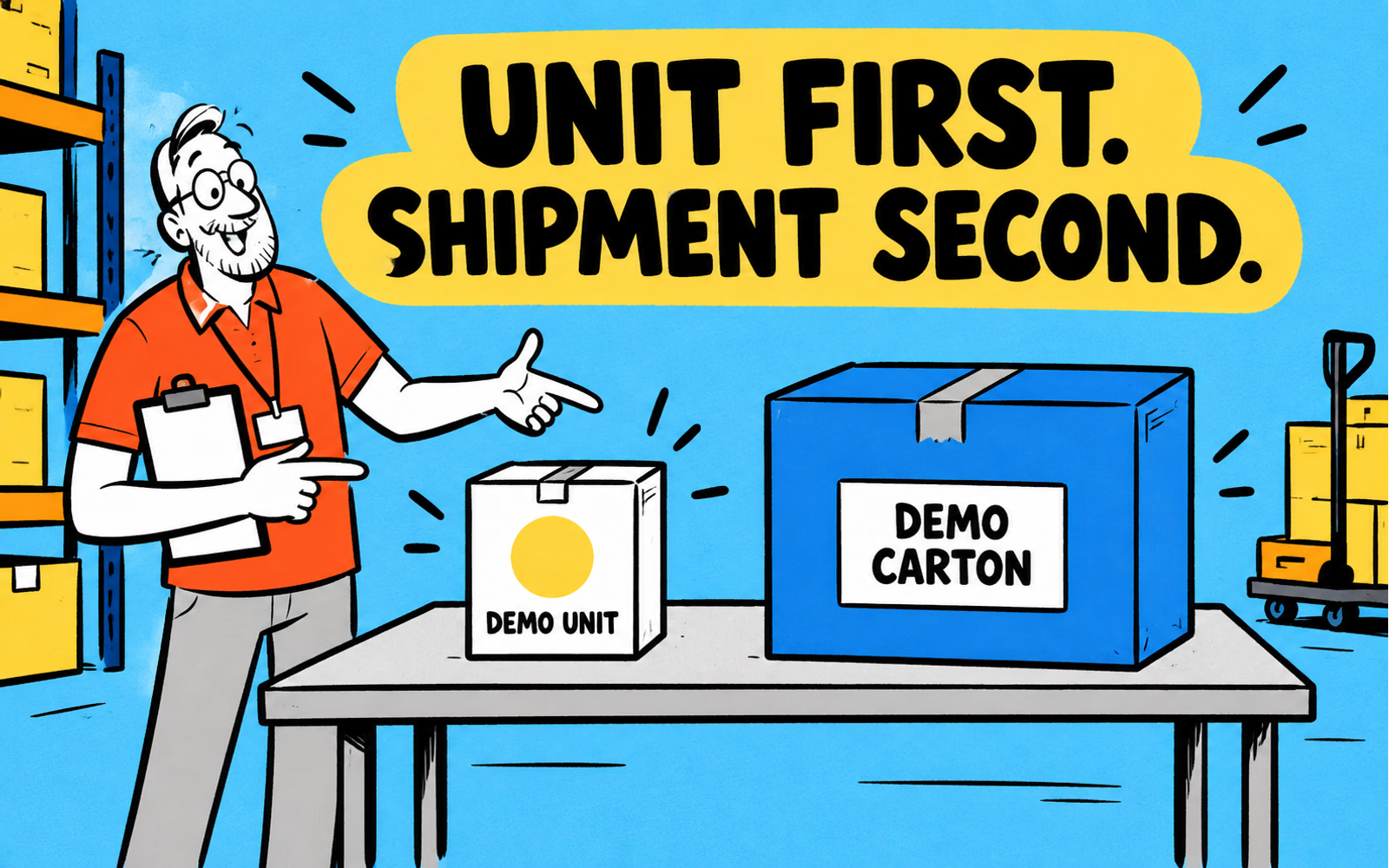
Treat the prepared saleable unit and the inbound shipping carton as separate records. Confirm product-specific US requirements before approving packaging or print.
Amazon FBA packaging requirements concern both the prepared product unit and the cartons used to send inventory to fulfillment centers. Start with the current US Seller Central instructions for the exact product category and shipment. Amazon’s public preparation guide, dated July 7, 2026 and reviewed here on October 6, distinguishes category-specific preparation and labeling tasks. A printed retail box does not by itself confirm FBA suitability. Keep unit preparation, identification and inbound shipment records separate.
An attractive product box is only one part of an FBA shipment. This planning checklist helps you brief the packaging supplier without confusing the retail unit with the carton that carries inventory into the fulfillment network.
Identify the product category and current US rules
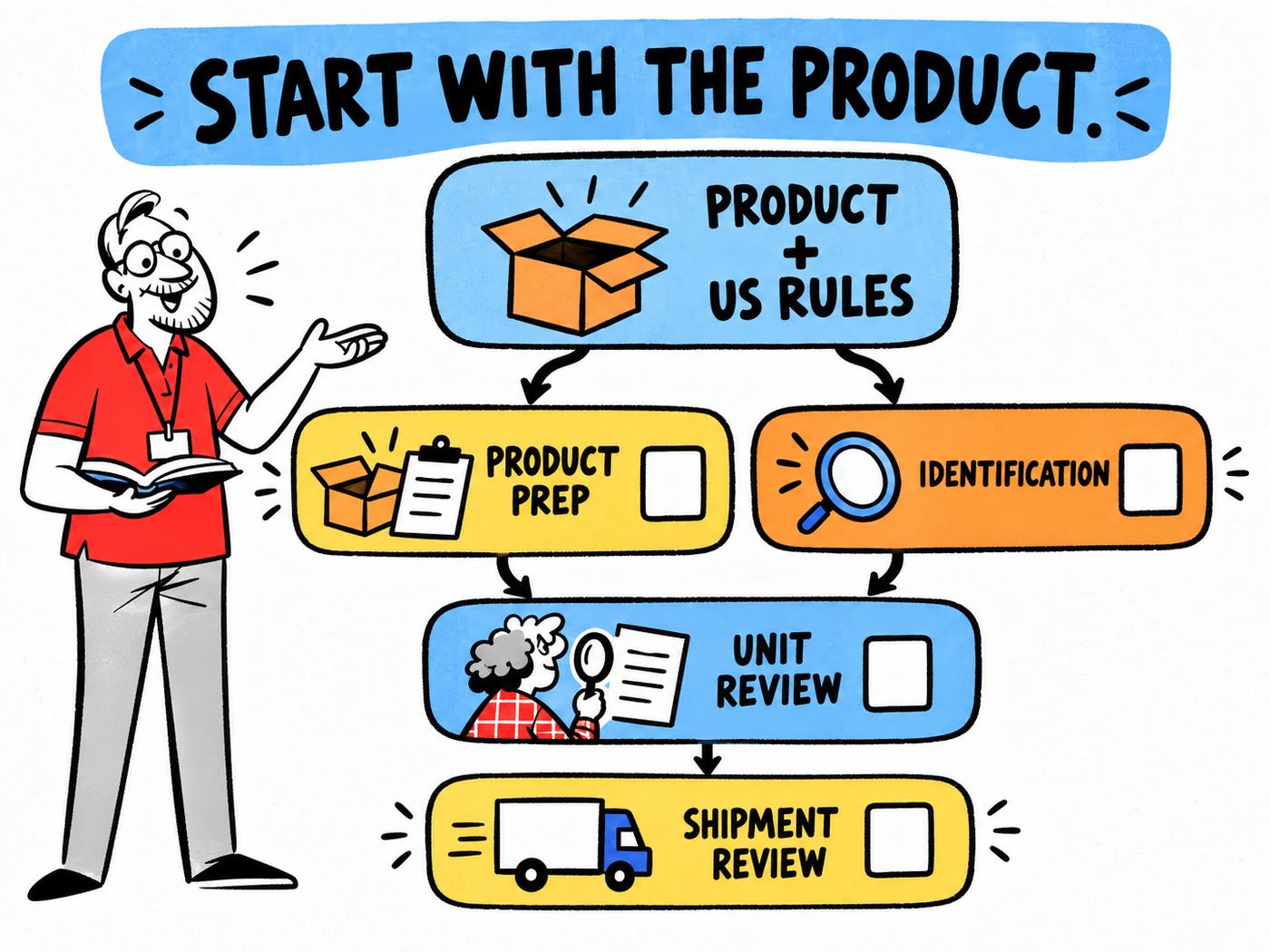
Use Amazon’s public preparation guide to understand the categories of work, then check the current instructions available for your US inventory in Seller Central. The guide discusses bagging for categories such as apparel, small items and liquids, and protective preparation for fragile or sharp items. The exact product determines what must be reviewed.
Do not infer a complete preparation specification from a product photo or another seller’s unboxing. A similar-looking item can have different contents, edges, closures or handling needs. Record the product identity and the current requirement reference before choosing the pack.
| Question | Record to keep | Avoid assuming |
|---|---|---|
| What is the saleable unit? | Exact product or defined set | Every piece ships independently |
| Which US instructions apply? | Category, source and review date | A generic box meets every category |
| What preparation is needed? | Confirmed method for this product | Decoration provides protection |
| What identification is required? | Current barcode and labeling instructions | One barcode choice fits all inventory |
This article does not reproduce numerical bag specifications, warning thresholds, carton limits or barcode eligibility rules. Confirm those details in the current product and shipment workflow. Our search review is qualitative and does not establish keyword volume. The useful contribution here is a clear handoff between product preparation and packaging design.
Separate unit preparation from shipment cartons
The unit is what Amazon receives as one saleable item. Its preparation, closure and identification need their own review. The shipment carton groups prepared units for the inbound journey. Its contents and dimensions belong to a different record.
Amazon’s December 2022 Send to Amazon overview explains box-content information and case-pack templates containing box weight, dimensions, preparation and labeling details. It is useful background for that distinction; follow your current account workflow for the actual shipment instead of treating the dated article as a current interface map.
| Level | Purpose of your record | Keep separate |
|---|---|---|
| Prepared unit | Product, preparation, unit identity and complete packed size | Inbound carton contents |
| Inbound carton | Which units are inside and the actual closed carton details | Retail product dimensions |
| Shipment | Current routing and labels generated for this shipment | Permanent printed branding |
A defined kit illustrates why this matters. First settle what constitutes one sellable kit and how its pieces stay together under the applicable instructions. Then record how many prepared kits go into each shipment carton. Counting individual pieces and counting saleable kits are different operations.
The flow graphic ends with separate unit and shipment reviews. Its empty planning stages are not a certificate or a completed inspection. Discuss product boxes and shipping cartons as different structures, each tied to the relevant arrangement.
Plan readable labels and accessible information
Amazon’s reviewed public guide describes labels on flat, smooth areas rather than corners and calls for relevant identification to remain on the exterior after added preparation. Reserve that space before placing decorative graphics. Check the actual closed, prepared unit rather than relying only on the unassembled carton file.
Confirm the identification method for the inventory in your current US account. A product barcode, an Amazon inventory label and an inbound carton label perform different tasks. Do not substitute a printed decorative code or a supplier’s sample for the label required by the workflow.
Check identification after every added layer
An outer bag, wrap or other required preparation may change which surface is accessible. Revisit the reserved area after that layer is added. Keep product information and required preparation markings available according to the applicable instructions.
Use the barcode placement guide for general artwork planning and discuss custom labels only after identifying their specific role. Final barcode verification belongs to the finished relevant item; a screen mockup cannot demonstrate that an operating code scans correctly.
Our DEMO labels intentionally contain no usable inventory or shipment barcode. They help explain the separation of levels without inventing an Amazon interface or implying acceptance of the illustrated packaging.
Check the final package before requesting print
Collect the product, preparation method, complete packed-unit dimensions, artwork template and reserved information areas in one unit brief. Keep the inbound carton arrangement on a related sheet with its own measurements and content record. The measurement guide helps distinguish usable interior space from exterior size.
Request print against the exact proposed structure and version. A change to the unit’s protective layer can affect its final size and the carton arrangement. A change to printed graphics can affect identification space. Record both before repeating the order.
| Review | Question for the team | Supporting record |
|---|---|---|
| Product preparation | Does the actual method match the current requirement? | Product-specific US source |
| Unit layout | Does information remain accessible after preparation? | Closed reference unit |
| Carton arrangement | Do the contents match the shipment record? | Packed carton and content list |
| Print version | Is every file tied to the right structure? | Artwork approval and template version |
Use the artwork guide for file preparation after the physical and information requirements are confirmed. Send the supplier the intended use, relevant packed dimensions, quantities and delivery ZIP; a request for an “FBA-approved box” alone leaves the product-specific work undefined.
For other marketplaces, read the TikTok Shop US checklist or the eBay guide. Each order flow needs its own source record. Finishing one checklist does not establish compliance with another platform.