
Packaging Insert Ideas: Care Instructions, Brand Stories, and Reorder Help
Choose a printed insert around the buyer’s next question. Compare care, story, support, and reorder messages while keeping structural supports separate.
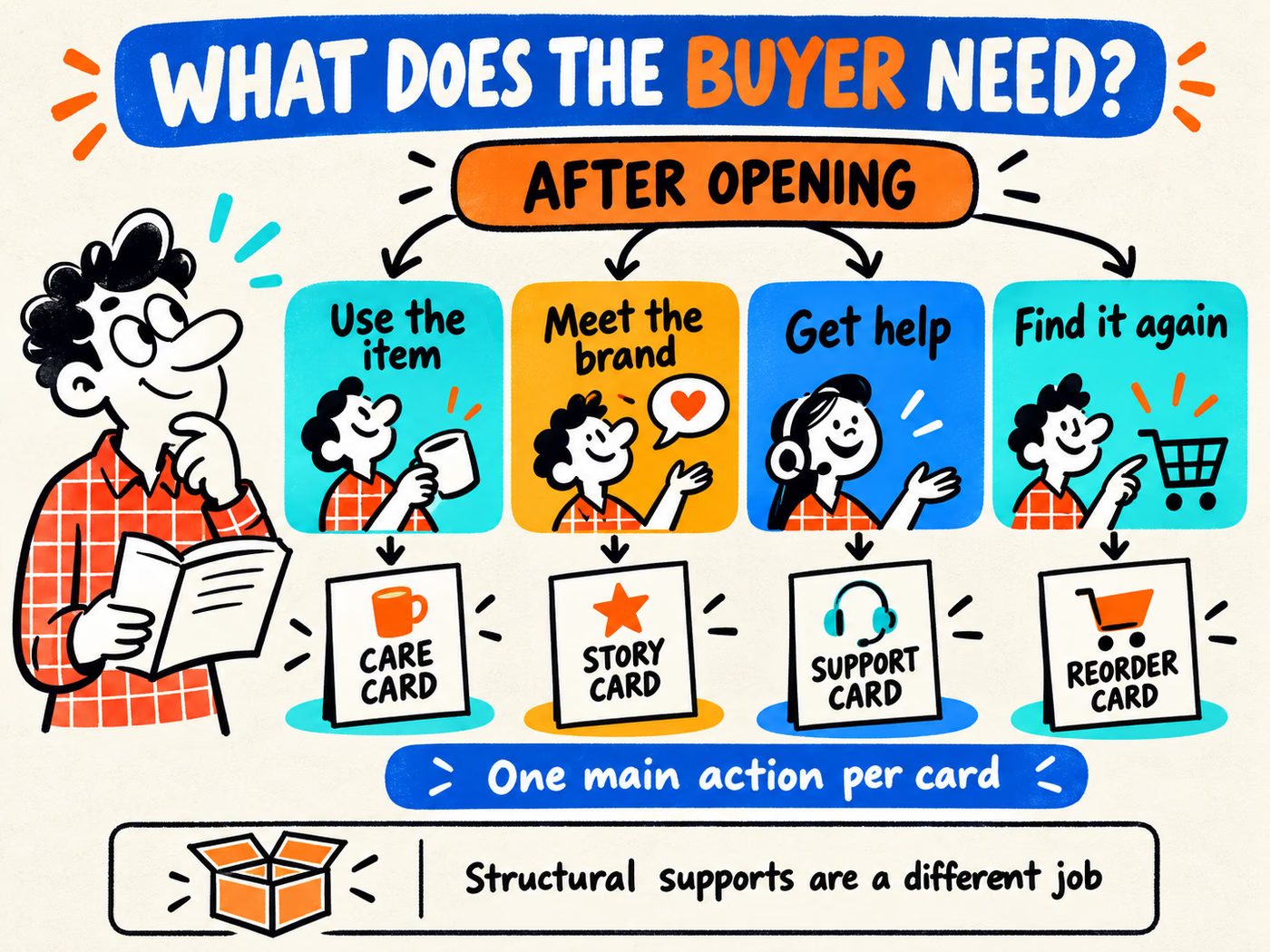
Useful packaging insert ideas start with what the buyer needs after opening: product-specific care, a concise brand story, help with a question, or a clear way to find the item again. Choose one main action for the printed card and make it easy to read. An information card has a different job from a structural insert that holds or separates products.
A card earns its place when it answers a real question. Begin with that question, then choose the message, format, and position inside the package.
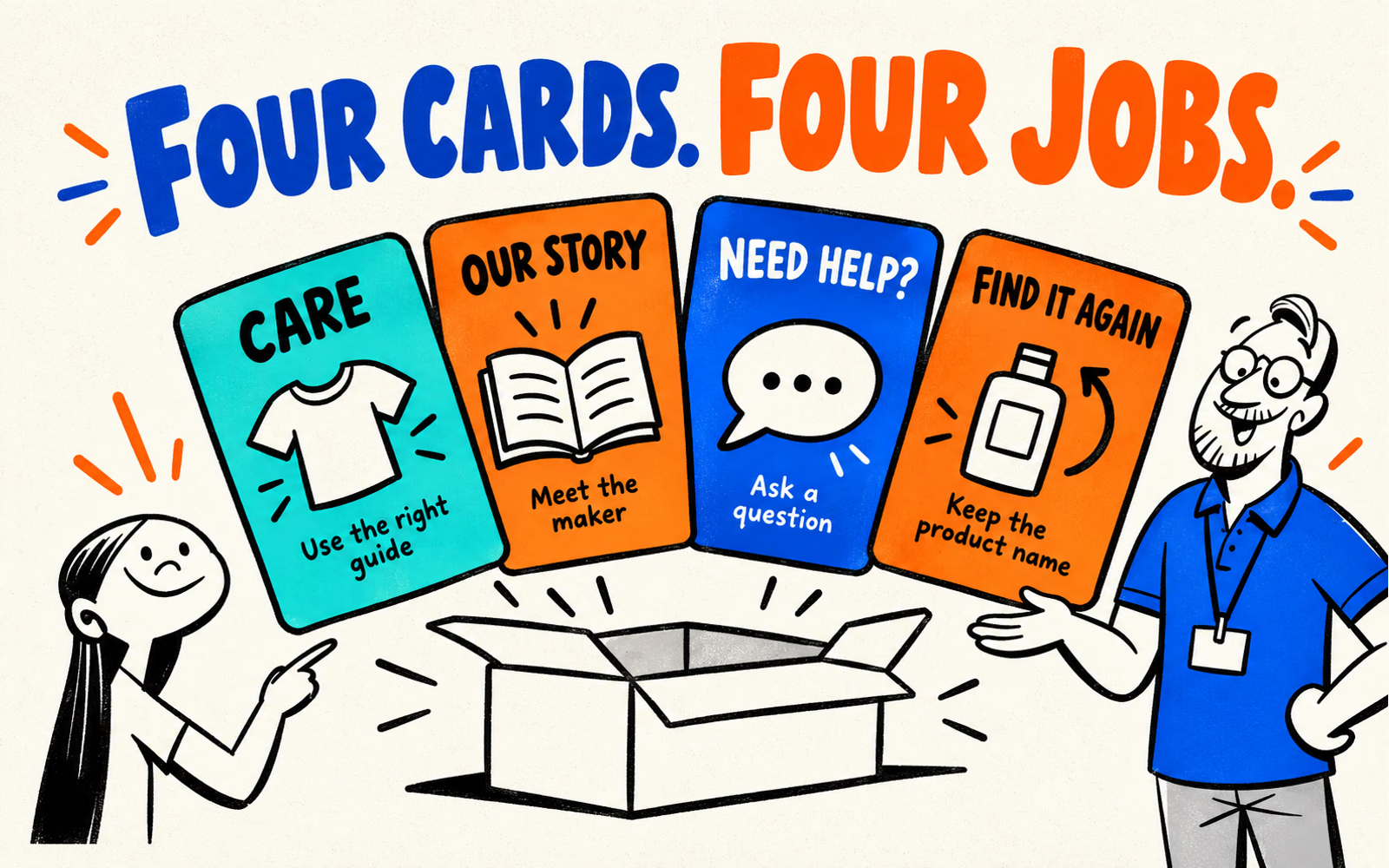
Choose the job of the printed insert
Think about the moment after the product is removed from its packaging. Does the customer need instructions specific to the item, an introduction to its maker, a route to support, or an identifier for a future purchase?
Separate information from physical support
A printed insert card communicates. A structural insert positions or separates contents and needs its own construction and fit review. A decorative card should not be treated as proof of shipping protection. For that physical arrangement, see the structural insert and loose-fill comparison.
List information already on the product or its packaging. Avoid making the buyer sort through several copies of the same message. If an important instruction must stay with the item, plan its location accordingly.
Write the card’s purpose in one sentence
- Help the buyer use this particular product.
- Explain one accurate detail about the brand.
- Show where to ask a question.
- Help the buyer identify the same product later.
Compare care, story, support, and reorder messages
The following examples are original copy starters. Replace placeholder fields with verified information before printing; they are not complete instructions, active contact details, or promotional offers.
| Card | Original copy starter | Confirm before printing |
|---|---|---|
| Care | “Keep this guide with your {product name}. Follow the care steps prepared for this item.” | The actual product-specific instructions and where they appear |
| Story | “Meet {brand name}. Here is the detail behind this piece: {confirmed story}.” | The maker’s facts and the connection to the included product |
| Support | “A question about your order? Contact us through {verified support destination}.” | A current, accessible support route and useful order reference |
| Reorder | “Want to find this item again? Keep the product name: {accurate identifier}.” | The product identity and current destination, if included |
Care: make the wording specific
Use confirmed instructions for the materials and construction of the actual item. Do not turn a generic cleaning suggestion into a universal routine for different garments, finishes, or products. Resolve uncertain wording before artwork approval.
Story: keep it factual and brief
A single true detail about the maker or design can give the product context. Leave invented sourcing, sustainability, or production claims out of the message.
Support and reorder: verify the destination
Check printed links and any QR destination before approving the file. Keep the essential product identifier readable without a scan. A reorder card does not need an invented discount or a code that has never been activated.
Keep the layout readable and useful
Start with a clear heading, the essential message, and the main action. Check the text at the card’s proposed finished size rather than judging it only on a zoomed-in screen.
Give the important line enough space
Keep decorative elements from competing with instructions or contact information. If the wording needs more room, consider another side or a different format and confirm the proposal. Shrinking every line is rarely a helpful first response.
Place the card where it can be found and removed comfortably during the opening. Check whether it hides the product, catches on another component, or changes the packed dimensions. Evaluate the complete arrangement.
A thank-you can accompany the main message. For original wording, see the forty thank-you examples, then keep your chosen phrase distinct from the useful instructions.
Specify the card for your package
Record the intended use, proposed finished size, sides to print, wording, artwork versions, and quantities. Describe where it sits inside the package and whether different products require different care cards.
Evaluate insert cards and thank-you cards for that job. Use the artwork guide after the format is confirmed and the cost guide to clarify included quote scope.
Keep a dated approval record for wording, links, and versions. Recheck it when the product, support destination, or campaign changes. Old physical stock is useful only while its information remains correct.
One useful message.
Easy to find and read.
Planning your own insert cards? Share the intended use, finished size, artwork versions, quantities, and delivery ZIP for a project-specific quote.
Planning references
- BrandYourPack: Packaging Artwork Guide.
- Subscription Box Inserts vs Loose Fill.
- Custom Packaging Cost Factors.
Reviewed October 6, 2026. Original card concepts and placeholder copy. No active discount, support link, or universal care instruction is invented.