
Small Business Packaging Ideas: 15 Practical Systems to Plan Your Brand
Compare fifteen distinct packaging systems across apparel, beauty, coffee, bakery orders, and gifts. Choose a complete system before adding printed details.
The most useful small business packaging ideas combine the product, its journey, and the customer’s opening experience into one system. Start with fit and required protection, then choose a few purposeful brand details. The fifteen approaches below cover apparel, beauty, coffee, bakery orders, and gifts; each changes the packing arrangement or information task, rather than simply changing the color of the same box.
Use these concepts to build a short list. They are starting points for specification and sample review, with links to the detailed guides where you need them.
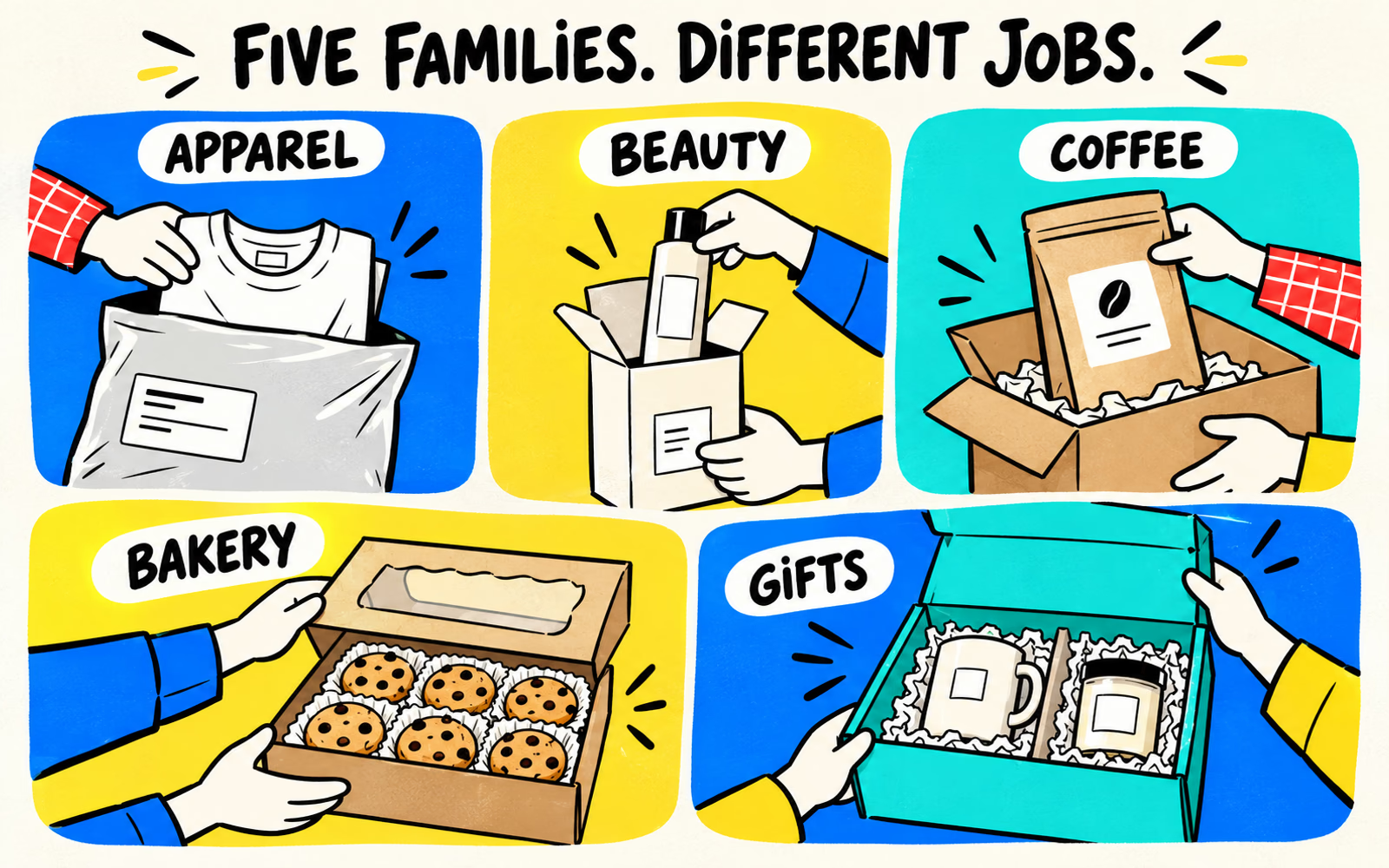
Choose a packaging system by what you sell
Lay out a complete representative order. Include every item, required protective material, and planned card or wrap. Record the packed dimensions, the sales channel, and how the customer will carry or receive it.
A tee, a bottle, and a cookie gift set may share a visual identity, but their physical needs differ. A retail bag groups an in-person purchase; a presentation carton introduces a product; an outer shipping pack has another role. Keep those roles visible in your brief.
Choose the problem before the printed detail
- What is in the complete order, including variants or bundles?
- Is it shipped, collected, or handed over in store?
- What protection and handling conditions must be reviewed?
- Which information should be visible first?
- How will staff prepare the order repeatedly?
Compare fifteen clearly different approaches
These systems differ by contents, arrangement, or workflow. None establishes a universal package size, a supplier offer, or tested performance.
1. A single folded tee in a specified mailer
Build around the finished fold, with a compact insert only if it gives useful information. Check loading, closure, and the required protection with the actual garment. See the apparel packaging guide.
2. A bulky garment with a planned box opening
Evaluate a box for the hoodie’s full packed thickness and easy removal. Keep tissue organized around the fold rather than adding layers that make the fit unclear.
3. A multi-garment order with shared presentation
Arrange two garments as one order and measure them together. Use one order-level card, with product-specific information where needed. Check the largest normal size combination before selecting the format.
4. One beauty product in a presentation carton
Evaluate a product carton around the actual container and its confirmed information. Plan an outer shipping arrangement separately when the purchase will be mailed; a decorative carton does not establish shipping protection.
5. A two-product routine with a clear reading order
Keep the two containers identifiable and organized in a shared pack. Use a card to explain the maker’s confirmed product sequence. Any compartment or support is a construction to review, rather than an assumed included feature.
6. A beauty gift set with an order-level message
Separate product information from the gift message. Plan the reveal around the complete set, with a card that can be removed without losing essential product details. Confirm any required separation or support.
7. One coffee pouch with a central information label
Use a clear label area for the product identity and changing information. Keep the pouch specification separate from the graphic concept. Read the three coffee design systems.
8. A coffee sample collection with distinct identifiers
Give each filled sample its own accurate identifier and organize the collection in a suitable outer arrangement. Confirm pouch dimensions and sealing requirements for the actual fills before approving the layout.
9. A coffee range built around shared branding
Keep the brand area stable while variant information changes in a planned zone. Record the quantity and artwork version for each coffee. Color can help organize the range, but retain readable text identifiers.
10. A cookie order arranged by count
Start with the actual cookies, their finished dimensions, and the intended arrangement. Coordinate a box and label around that layout. Use the cookie packaging guide for the fuller brief.
11. A takeaway order grouped for a clear handoff
Specify food containment, carrying, and identification as separate tasks. A readable order label helps distinguish the packed combinations. Explore the restaurant handoff workflow.
12. A bakery gift assortment with a planned reveal
Design around the different items and the customer’s opening sequence. Confirm any separation and direct-contact materials before adding the gift wrap. Keep the gift message distinct from required product information.
13. A recurring subscription with a changeable edition card
Separate the recurring outer identity from edition-specific contents and instructions. Measure the current assortment and track what changes next month. See subscription packaging planning.
14. A PR launch kit with one focal product
Build the first look around the product and one concise story card. Add useful product and contact information without crowding the opening. Use the PR concept guide.
15. A two-item corporate gift with one useful introduction
Arrange the items together and evaluate their support and outer pack. Keep the recipient message separate from the actual product details. Confirm artwork versions and quantities before committing to recipient-specific stock.
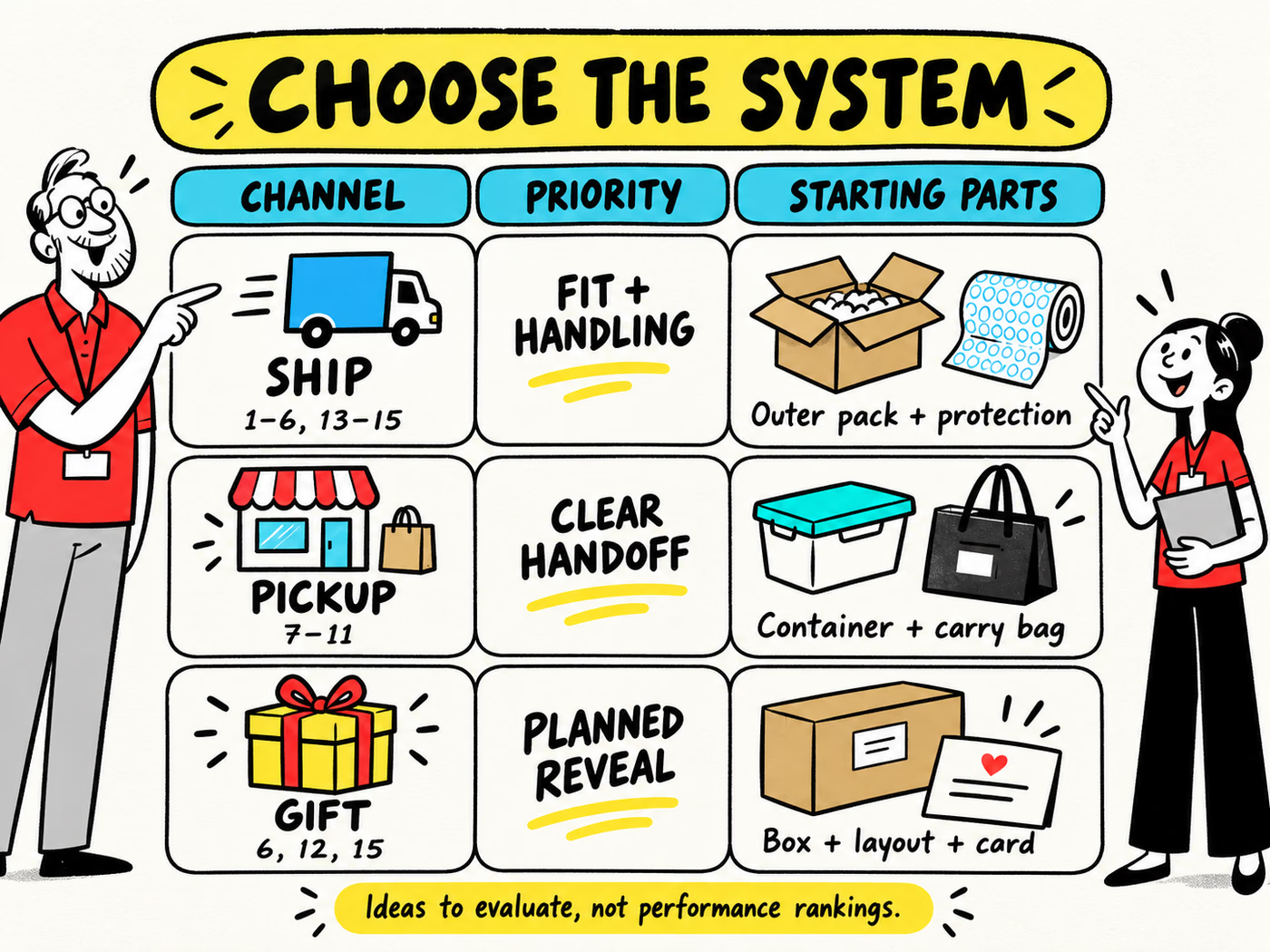
Decide what to personalize first
Choose the surface or component that carries the most useful identity in your workflow. For some orders that is the outer box; for others it is a label on a pouch or a card introducing a set. Give it a defined job before expanding the printed system.
| Need | Component to evaluate | Check |
|---|---|---|
| Recognizable exterior | Printed outer pack or applied identity | Visible area, closure, and shipping-label position |
| Changing variants | Planned label area | Accurate identifiers, application surface, and stock by design |
| Useful after-opening help | Insert card | Readable wording, placement, and current destination links |
Compare mailer boxes, labels, and insert cards against that need. In an online store, the branded unboxing guide helps connect the physical components.
Build a short list for your own quote
Choose two or three systems that fit your actual orders and write down what differs. Keep dimensions, quantities, and required protection consistent when comparing presentation choices.
Include intended use, packed-product measurements, component roles, artwork versions, quantities by version, and delivery ZIP. Use the cost planning guide to organize quote scope and the artwork guide after formats are confirmed.
Choose a system.
Make each part useful.
Planning your own mailer boxes? Share the packed-product dimensions, intended use, artwork versions, quantities, and delivery ZIP for a project-specific quote.
Planning references
- BrandYourPack: Packaging for Apparel Brands.
- Custom Packaging Cost Factors.
- Packaging Artwork Guide.
Reviewed October 6, 2026. Fifteen original planning concepts, not stock availability, supplier prices, or performance rankings.