
Plan hot matcha and cold boba as separate serving references. Record the recipe, working fill, cup construction and exact closure before preparing branding and quantities.
Coordinated matcha packaging ideas can connect an opaque hot cup and a clear iced cup through one visual identity while keeping their operational specifications separate. Record the actual drink, working fill, cup construction, exact closure, print or label conditions, and handoff for each. A shared motif does not establish shared thermal suitability, lid fit, or label performance.
This matcha design discussion extends the shop planning sections below. Those sections continue to cover boba, toppings, and closure systems alongside the broader menu.
Separate hot matcha from iced service
Start with two complete recipes and serving arrangements. Record the hot drink’s intended portion and use conditions separately from the iced drink’s liquid, ice, and working fill. Menu size names alone do not describe either arrangement.
| Field | Hot matcha | Iced matcha |
|---|---|---|
| Recipe and fill | Complete drink and intended serving conditions | Complete drink, ice, and closure space |
| Cup | Proposed construction for the intended hot use | Proposed construction for the intended cold use |
| Closure | Exact matching cup and lid references | Exact cup and proposed closure references |
| Branding | Print area and any sleeve arrangement | Print or label area and application conditions |
Use the cup and lid guide to organize reference-specific checks. Similar capacities do not prove that two cups share a rim or matching lid.
Keep hot-use questions explicit
Ask for the exact proposed cup construction and suitability for your serving conditions. Review any sleeve as part of that actual setup. The paper cup construction guide helps frame those questions without assigning measured insulation to an illustration.
Coordinate the two drink presentations
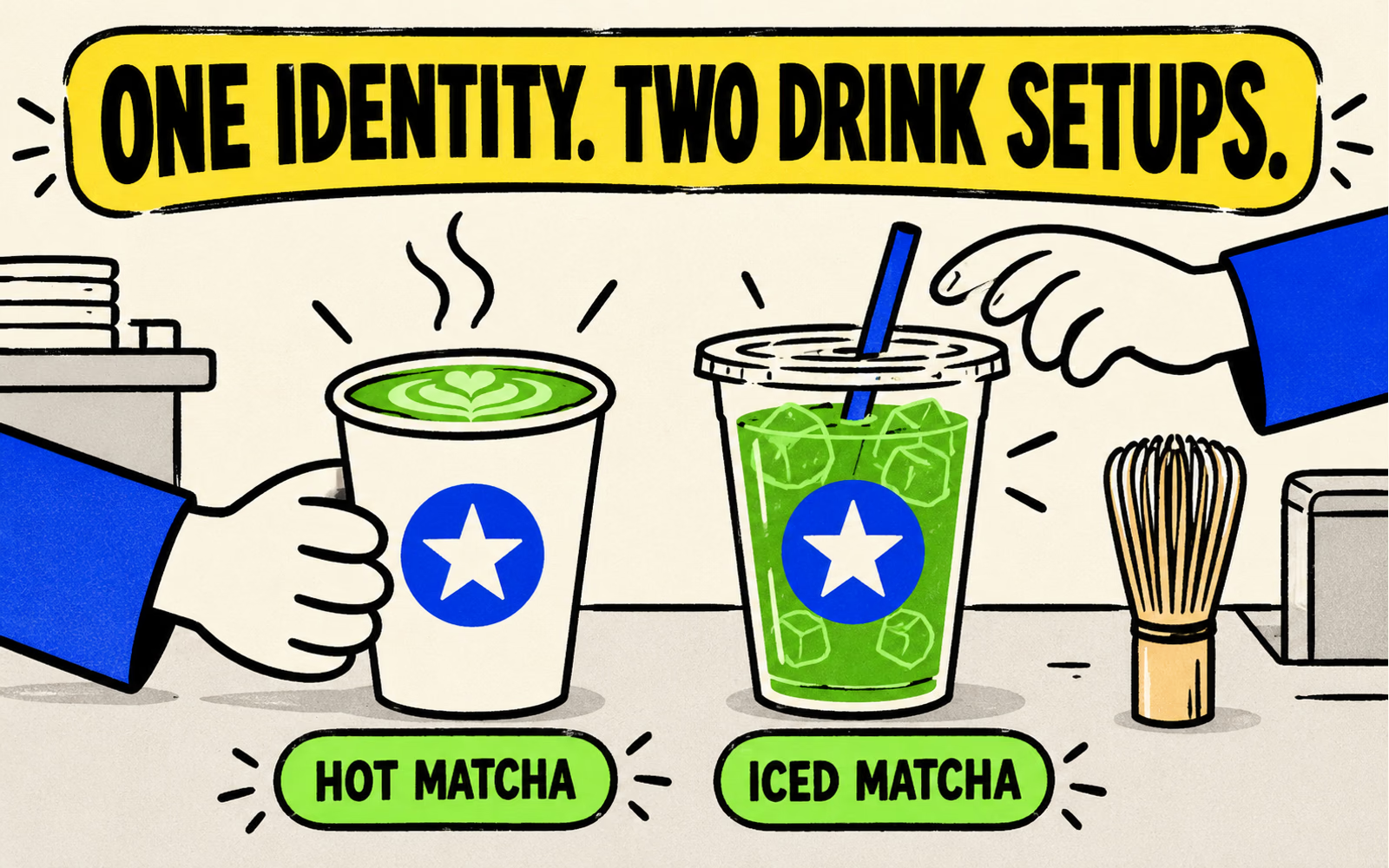
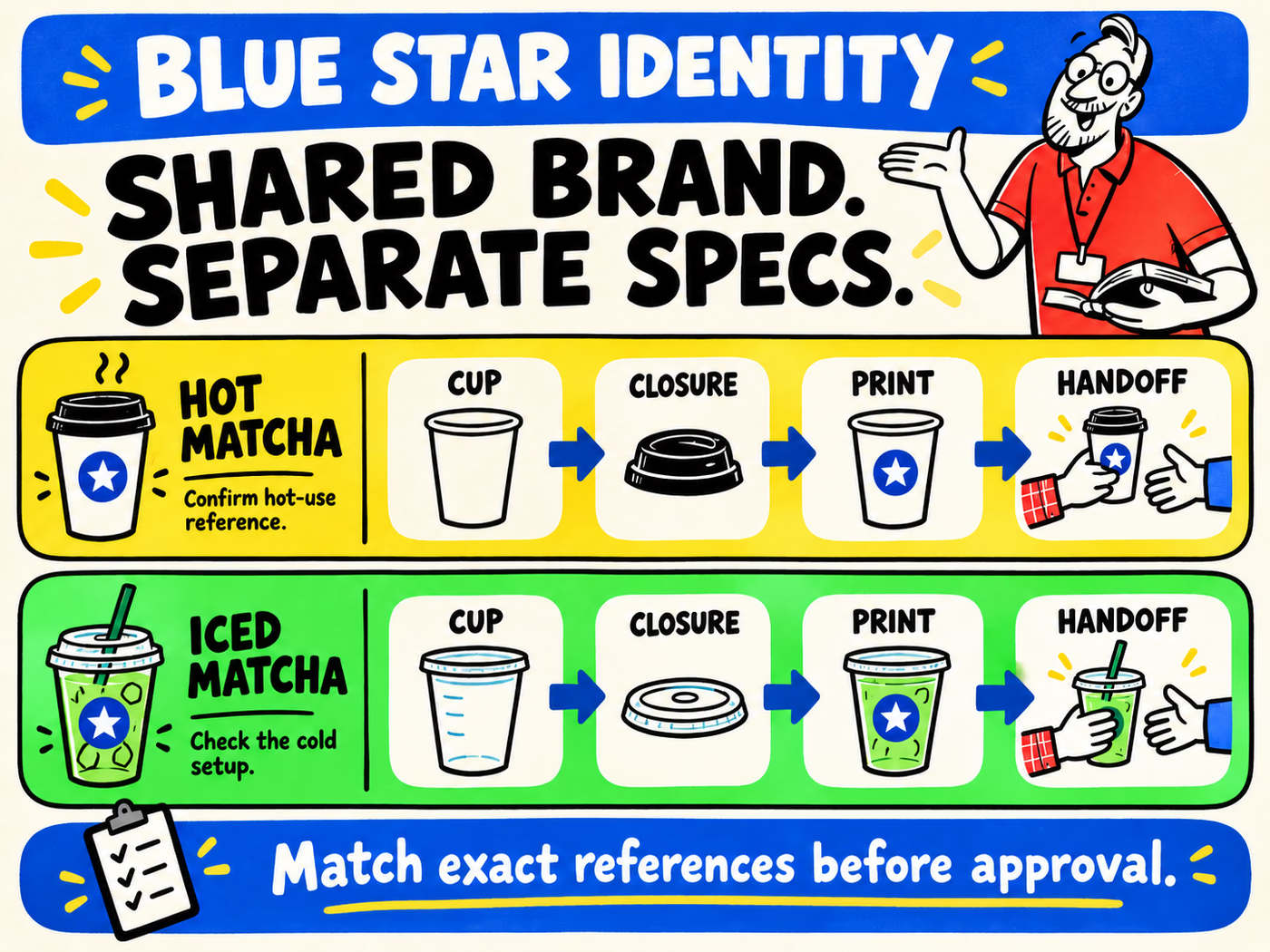
Choose a compact motif and a stable name treatment that can work within both proposed print areas. In the original concept, a blue-and-white star badge connects the hot and iced cups. Each cup still gets its own artwork placement and operating brief.
Adapt the graphic to its background
The opaque hot cup provides one visual surface; the transparent cup shows the drink and ice behind the artwork. Evaluate the graphic on the real proposed references rather than simply copying the same file dimensions.
Keep the customer’s order details separate from decorative branding. Staff should be able to identify the correct drink without searching through a pattern. Confirm where variable drink information belongs in your service process.
Approve two paths, not one assumption
Review cup, closure, printing, and handoff for each drink. A shared identity can make the range feel coherent while the component list remains distinct. Keep the approval record tied to the actual references and recipe observations.
Plan labels, sleeves, and carrying pieces
Assign accessories a practical role. A sleeve may provide a visible identity area on a proposed hot-cup setup. A label may identify a drink or carry artwork on a cold cup. Carrying pieces group the complete filled order for the intended handoff.
Evaluate the actual label application
Record when the label is applied, the cup surface condition, and the intended cold-drink handling. Check adhesion and appearance with the proposed label and cup under those conditions. A simulated graphic or a few illustrated droplets are not evidence of a successful condensation test.
See the transparent-cup branding guide for a layout review method that also applies to checking a matcha concept’s background. For the hot cup, the sleeve design guide covers the visible area and seam.
Count accessories from your service policy
Record which orders actually receive sleeves, labels, or carrying pieces. Try the complete filled arrangement before approving the handoff. Keep accessory quantities tied to the corresponding drink reference, not simply to one combined menu total.
Prepare your matcha packaging specification
Write one line for hot matcha and another for iced matcha, with recipe use, requested capacity, working fill, exact cup and closure references, artwork versions, and quantities. Mark pending fit or application questions clearly.
Evaluate paper cups, plastic cups, and cup sleeves against these references. Use the artwork guide after the dimensions and print areas are confirmed.
The existing shop plan below retains the separate boba sealing and topping questions. Keep any machine, film, or sealing workflow confirmation with the appropriate equipment and consumable suppliers.
One cafe identity.
Clear serving references.
Planning your own café packaging? Share your drink use, requested capacities, exact lid needs, quantities by design, and delivery ZIP for a custom quote.
Planning references
- BrandYourPack: Cup Sizes and Lid Compatibility.
- Single-Wall vs Double-Wall Paper Cups.
- Packaging Artwork Guide.
Reviewed October 6, 2026. Original design concepts; thermal suitability, exact fit, and label performance require reference-specific review.
Map each drink to its complete serving setup
| Drink | Record | Review separately |
|---|---|---|
| Hot matcha | Recipe, serving portion and intended temperature | Cup construction, lid and any sleeve |
| Iced matcha | Drink, ice and working fill | Cup, closure and label application |
| Boba | Drink plus toppings and ice | Usable fill, opening and closure system |
| Several drinks | Complete filled arrangement | Carrying support and handoff |
Explore paper cups and plastic cups as formats to specify. Nominal ounces alone do not confirm a rim, lid or sealing-machine match.
Keep recipe fill separate from nominal capacity
Record the completed drink, including ice and toppings, and test the intended serving sequence on the proposed sample. Identify working space needed for closure and normal handling. Different recipes sharing a menu size name can use different fill arrangements.
The fill-space worksheet documents this recipe-specific check without a universal topping allowance.
Confirm the closure system before approving print
A lid requires the exact matching cup and lid references. A sealing workflow additionally requires the cup construction, rim geometry, film and machine documentation to be reviewed together. We have not confirmed a dedicated sealing kit, film or machine offer through this content batch.
Use the sealing specification guide to prepare questions for the equipment and consumable suppliers.
Plan branding and quantities by actual recipe use
- Quantity per cup size and artwork design.
- Matching closure quantities and confirmed references.
- Sleeve use for the intended serving setup.
- Label application conditions on iced-drink cups.
- Napkins and carrying components from service policy.
For startup quantities, reuse the opening-order method with your own shop assumptions.
BrandYourPack planning worksheet. Sample checks described here are steps for your project, not published test results. Confirm material, dimensions, print, quantities and intended use for the proposed reference before approval.
Build a coordinated setup
Selections to review for your project. Each reference and its conditions are confirmed in your quote.
Hot matcha service
Review the intended paper cup, matching lid and any sleeve as one serving reference.
Cold drinks to go
Review the cup, completed recipe and confirmed closure before choosing print or an applied label.
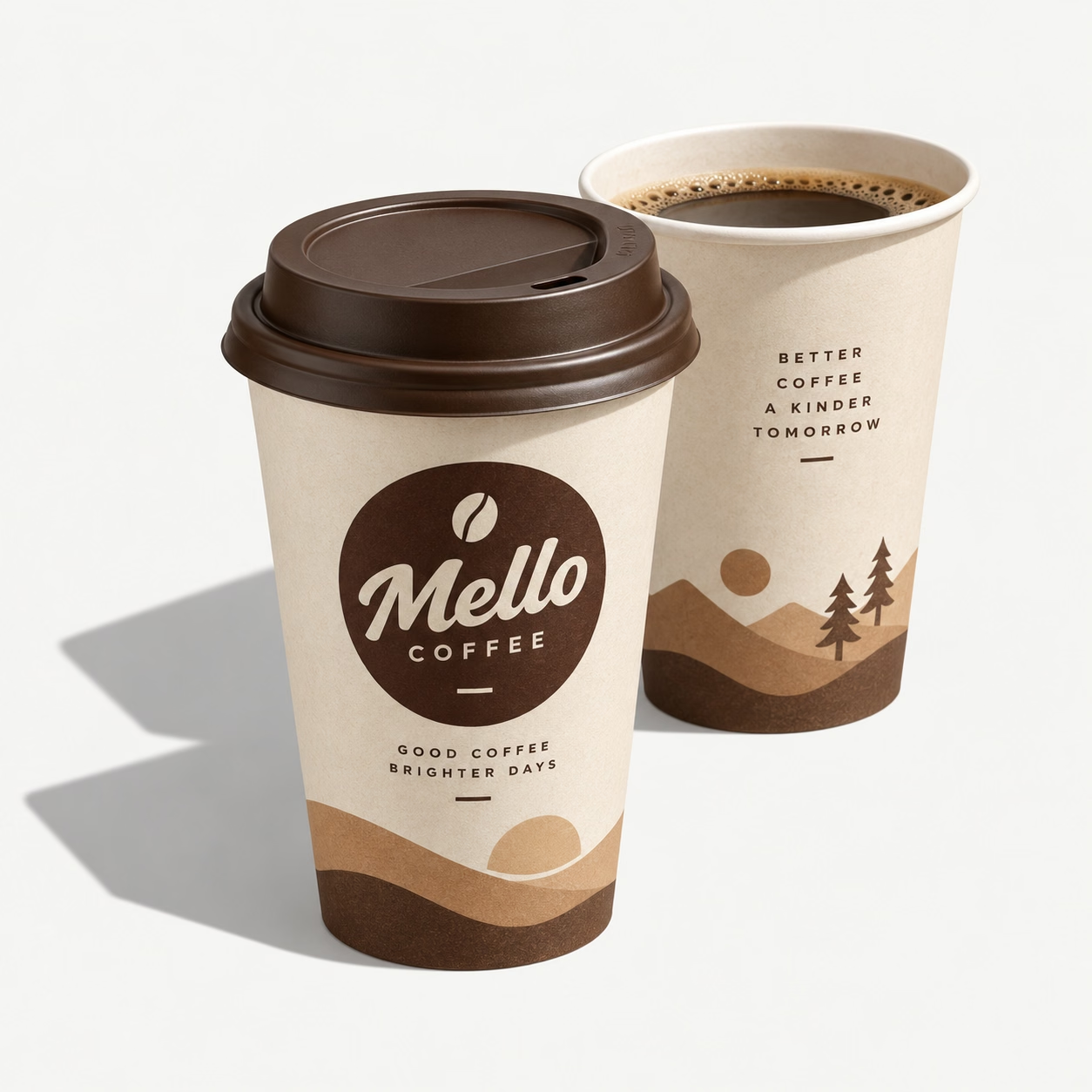
One menu. Distinct serving references.
Illustrative brief: a shop serves hot matcha, iced matcha and boba. Its artwork list follows the approved cup references; recipe trials resolve working fill, and equipment suppliers confirm any proposed sealing combination separately.
Use the quote checklistQuestions about this decision
Can any plastic cup be sealed for boba?
No universal compatibility is established. Cup construction, rim, film and machine references must be reviewed together.
Can one cup size serve iced matcha and boba?
Possibly as a proposed reference, but test the completed recipes and closure space separately. A shared menu size is not proof of equal useful fill.
Do you supply sealing machines or film?
This content expansion does not add a confirmed machine, film or complete sealing-system offer. The guides explain what to specify before sourcing.
Are sleeves required for every matcha order?
Count them only for the approved serving arrangement and actual service policy. Review their fit on the intended cup.
Ready to put your plan on paper?
Share the intended use, dimensions, quantities, artwork and delivery ZIP. We will review the specification for your project.